
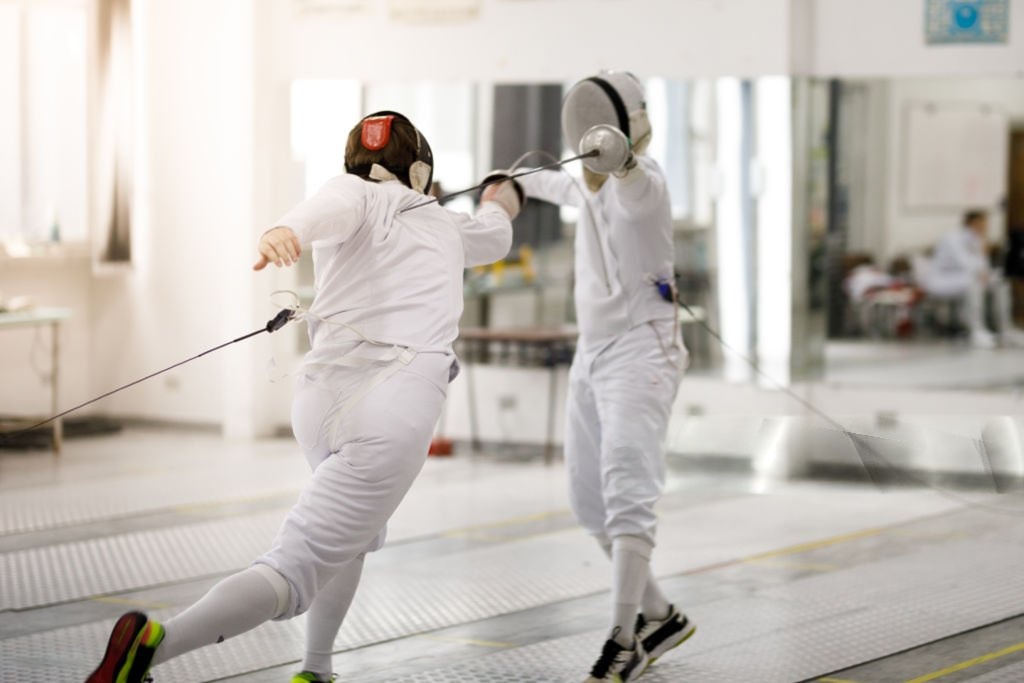
Fencing is often perceived as an expensive, elite sport meant only for a select few.
But what is the actual financial commitment needed to pick up a blade in Singapore?
From initial trial sessions to recurring club memberships and full competitive equipment kits, here is a transparent, data-backed breakdown of the costs of learning fencing in Singapore.
Summary: Costs of learning fencing in Singapore
Starting fencing in Singapore is highly accessible for beginners, with costs scaling as you transition into competitive training.
- Trial class: Entry trial sessions cost between S$30 to S$50, with all safety gear provided by the club.
- Beginner classes: Structured 8 to 10-week foundational courses range from S$45 to S$60 per class.
- Private lessons: Private 1-on-1 lessons cost around S$100 per session.
- Equipment: When you are ready to buy your own basic gear (350N safety rating), a full personal setup ranges from S$450 to S$600.
1. Trial class (S$30 – S$50/class)
If you just want to see if you like the sport without spending a lot of money, almost every fencing club in Singapore offers a one-time fencing trial class. These introductory sessions usually last 60 to 90 minutes, introducing you to fundamental footwork and providing all necessary safety equipment on loan
On average, an introductory trial session costs between S$30 to S$50.
As a dynamic, fast-growing player in the local scene, DSFencing prioritises sports participation and interest development above all else. We offer some of the most cost-effective introductory rates in Singapore and provide all necessary fencing gear for students absolutely free until they feel entirely ready to invest in their own kit.
2. Beginner group programmes (S$45 – S$60/class)
If you decide to keep going, clubs usually group their beginner fencing classes into 8- to 10-week terms. These classes teach you how to balance, move your feet, and hold the sword.
A standard beginner course in Singapore usually costs between S$360 and S$600 total. This means you are paying around S$30 to S$40 per hour.
At DS Fencing, group training is split into 8-session terms, and each class is a long 1.5-hour session at S$360 per term. A typical class looks like this:
- Fun warm-ups: Jogging and games that train your body and mind to react quickly.
- Skill learning: Practising footwork, blade movements, tactics, and getting short 1-on-1 tips from the coaches.
- Bouts (Sparring): Putting on the full safety gear and playing real matches against classmates to practise what was learned.
When you pay for classes, who is actually teaching you? At many clubs, beginners are typically taught by senior students or assistant coaches who might not have much experience.
DSFencing does things differently. It was founded by former Singapore national fencers who design the classes and teach the students themselves. Even our assistant coaches are current fencers on the national team, which means beginners get high-quality coaching right from day one.
3. Private lessons (S$100/class)
Private lessons are critical in fencing to refine highly specific technical execution and tactical blade reactions. A standard 10-lesson private fencing package across Singapore’s leading clubs averages S$1,000 (working out to be S$100 per 30-minute lesson).
At DS Fencing, private lessons are 45 minutes long. This deep-dive training is reserved exclusively for two types of athletes: competitive fencers looking to rapidly scale their technical proficiency, or serious beginners who want to “short-circuit” the standard learning curve to jump straight into the competitive ranks.
These sessions focus relentlessly on fine-tuning technique, advanced skill progressions, and customised mental preparation.
4. Equipment costs (S$435 – S$500)
Eventually, you will want your own gear for hygiene and a better fit.
Fencing gear comes in two safety levels:
- 350N (CE Level 1): Basic protection for local club use
- 800N (FIE / CE Level 2): Puncture-resistant gear for major national and international tournaments.
A basic, entry-level set of gear (350N safety rating) usually costs between S$400 and S$500.
Here’s a breakdown of fencing equipment costs:
|
Gear Item |
Estimated Cost |
|
Fencing mask (350N) |
S$100 – S$120 |
|
Jacket & breeches set (350N) |
S$140 – S$175 |
|
Underplastron (Protective vest) |
S$45 – S$60 |
|
Fencing gloves |
S$20 – S$30 |
|
Body cords & mask wires |
S$25 – S$35 |
| Electric weapon (Epee/Foil/Sabre) |
S$120 – S$180 |
| Total |
S$450 – S$600 |
Some clubs like us at DSFencing waive this structural cost by letting you use club gear for free during your trial session. Check out this epee equipment checklist for what you need.
Total cost of fencing in Singapore
Ultimately, it depends on how far and deep you want to go into this sport. To summarise, let’s take a look at:
| Training level | Average monthly cost | What’s included |
| Casual fencing enthusiast | S$150 – S$200+ |
|
| Competitive fencing athlete | S$650 – S$900+ |
|
Fencing does carry a higher financial barrier to entry than running or swimming due to the specialised nature of the electrical scoring equipment and protective fabrics.
However, with flexible term packages and early equipment rental options, managing the cost of entering the sport is more highly structured and accessible than ever before.
Frequently Asked Questions (FAQs) about the cost of fencing in Singapore
1. How much do private lessons cost?
Private 1-on-1 fencing lessons are highly intensive technical sessions with a coach to fix specific tactical mistakes.
In Singapore, a standalone private lesson ranges from S$70 to S$100, depending on whether the session is 30 or 45 minutes long. Most fencers buy a package of 10 private lessons, which averages out to a bundle price of S$1,000.
2. Is fencing an expensive hobby or sport to pick up as a beginner in Singapore?
Not necessarily. While buying high-end gear can be costly, initial entry barriers are quite low. Most local clubs like DSFencing offer affordable one-time trials between S$30 and S$50 and provide all essential safety gear for free during your beginner term. It only becomes a high-cost investment once you transition into advanced competitive fencing training and need to buy personal, international-grade tournament gear.
3. How much does fencing equipment cost?
A complete beginner starter kit with a 350N safety rating (mask, jacket, pants, glove, underplastron, wires, and sword) costs between S$435 to S$500. If you progress to high-level national tournaments, you will eventually need FIE-certified 800N gear, which can push the total cost above S$2,500.
4. Are there any hidden or extra fees when fencing competitively in Singapore?
If you decide to compete in local tournaments, you must purchase an annual athlete license from Fencing Singapore, which costs S$25 per year for citizens and permanent residents.
Additionally, you will need to pay tournament registration entry fees (usually S$50 to S$80 per event) and factor in occasional costs for weapon repairs, replacement blades, and spare tip parts.
5. Can my child learn fencing through a school Co-Curricular Activity (CCA) to save on costs?
Yes, joining a school CCA is the most budget-friendly way to fence. Several secondary schools like Raffles Institution, Hwa Chong Institution, and New Town Secondary as well as tertiary institutions offer fencing as a formal CCA. The school typically covers facility costs and basic training gear for co-sharing, but most students are still required to get their own gear.
However, because school training slots are limited and cater to large groups, many competitive students still pay for external private club group and individual lessons to learn the sport meaningfully and to gain an edge in the National School Games (NSG).
6. Why do different weapons (Foil, Epee, Sabre) have different costs?
While basic protective clothing is identical, the electrical gear makes a difference in pricing. Epee is generally the cheapest to maintain because it does not require a conductive metallic vest (lamé) or a specialised insulated mask.
Foil and Sabre require extra metallic layers to track valid target areas, which can add an extra S$150 to S$300 to your overall equipment bill. Sabre blades also break more frequently due to the cutting nature of the weapon, leading to higher long-term replacement costs.